
Restoring the Church’s Encounter with God Through Beauty
I am a Catholic sacred artist whose work has grown out of a lifetime at the intersection of art, theology, prayer and evangelization.
Formed at Ringling College of Art and Design and the John Paul II Institute, and through five years with the Franciscan Friars of the Renewal, I create monumental sacred works that translate the Church's theology into images capable of forming the Christian imagination.
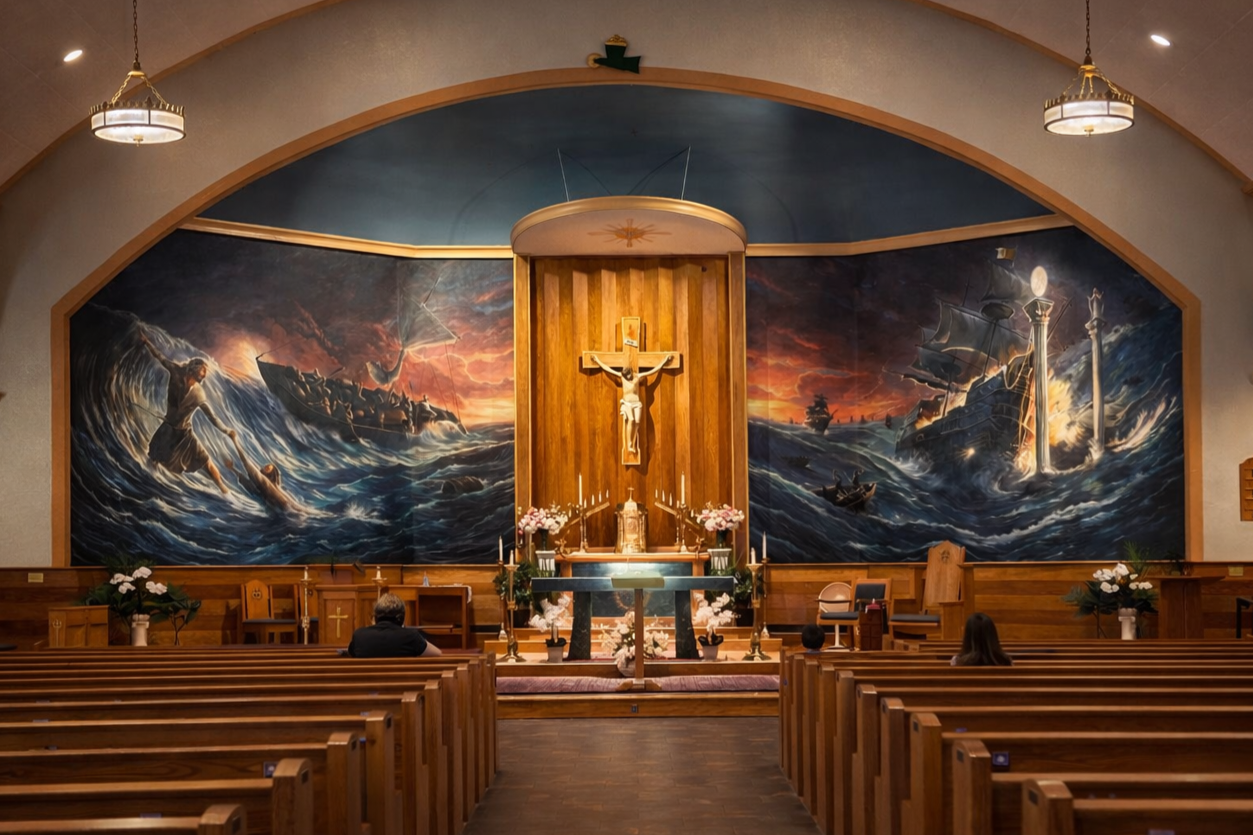
Sacred Art for your Church
Large scale sacred art for Catholic churches, rooted in theology, prayer, and the life of the Church.
My Mission
To restore the Church’s encounter with God through beauty, because beauty is the Church’s first and most powerful language of evangelization.
Best selling prints
Transform your home or office with our gorgeous best selling Giclee Prints.
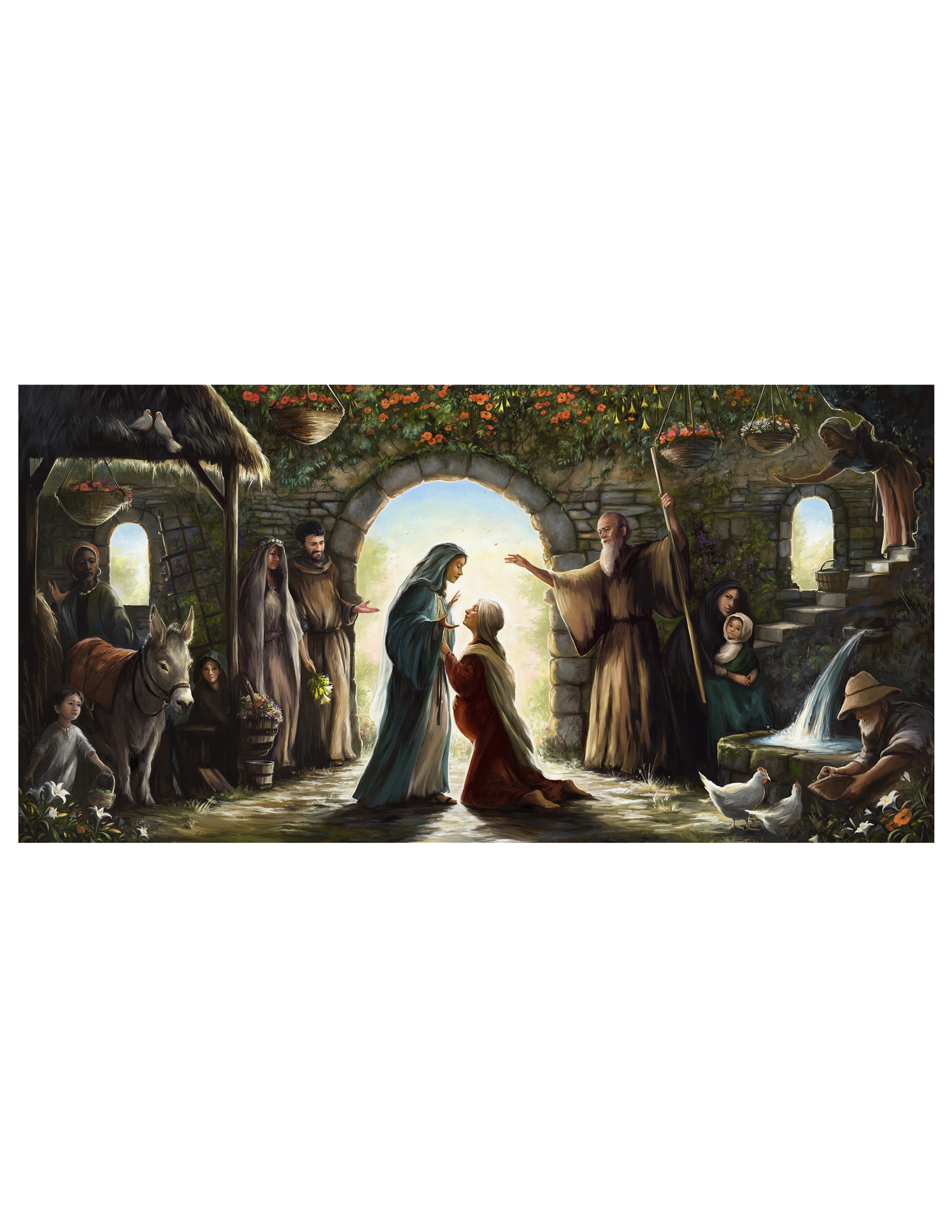
Our Lady of the Visitation “Blessed is she who believed”
A brief thematic sketch:
Saint John Paul II points to St Elizabeth’s words, “Blessed is she who believed” as the essential Mariological content of the Visitation. It reveals the truth about Mary, as the exemplar of one who has responded to the gift of God and has accordingly become “really present in the mystery of Christ.” Our Lady’s response to Elizabeth with the Magnificat hymn overflows with Messianic joy. This painting would convey a deep theological exploration of the Magnificat and its significance to the person of the Mother of God as well as to the lives and destiny of all Christians, through three key ideas:
Our Lady is “she who believed”
As the Second Vatican Council teaches, "the obedience of faith must be given to God who reveals, an obedience by which man entrusts his whole self freely to God.” At the Annunciation, responding to the message of the Angel, Mary gives herself fully to God and receives her mission and vocation, which culminates at the foot of the cross. Accordingly, Elizabeth’s greeting ends with the profound statement, “Blessed is she who believed that there would be a fulfillment of what was spoken to her from the Lord.” This is the moment which is also received in the life of every Christian, called to be one “who has believed” with loving reception of their mission/vocation through steadfast faith.
The painting would convey this moment of greeting with joy. It will be evident that Jesus is the hidden source of the overflowing joy expressed in the Magnificat. Parishioners would understand that having received Christ in the Eucharist and exit the church, that they too are called to believe in the fulfillment of what was spoken to them by the Lord, and that they are being sent forth into joyful mission.
2. Our Lady is the New Eve
“Blessed is she who believed…” also is a radical reversal of the posture of our first parents and points to the Beginning. In Genesis, Eve refuses to receive in obedience and grasps and attempts to take the gift of God for her own. Our Lady stands in opposition to that moment with every act of her person, and the Visitation is a testimony of the New Eve. This is beautifully conveyed by St. Irenaeus as he says, ”the knot of Eve's disobedience was untied by Mary's obedience; what the virgin Eve bound through her unbelief, the Virgin Mary loosened by her faith.” The Second Vatican Council continues, “In the light of this comparison with Eve, the Fathers of the Church-as the Council also says-call Mary the "mother of the living" and often speak of "death through Eve, life through Mary.”
In this image, Our Lady will be the model for all parishioners. That through our own “fiat” we become collaborators in the mystery of the redemption of the world through Christ. In Hebrews we read, ”Sacrifices and offering you have not desired, but a body you have prepared for me.... Lo, I have come to do your will, O God.” The painting will convey St Elizabeth and others in postures of reception and humility. Through various other symbols parishioners will grasp that they too are drawn up into the mystery of the unwinding of the tyranny of sin and the healing of the world.
3. Our Lady is Theotokos
The image of the Visitation is one of expectation and fulfillment. St. Elizabeth and Our Lady are pregnant with new life, the latter with the Source of Life. Mary is Theotokos, God-bearer, Mother of God. It is a great mystery but it is one in to which all Christians are called. Having received the Eucharist, the parishioners will understand that as they leave the church they too are tabernacles, God-bearers, and will see that Our Lady is the model and image of their life and destiny.
It is imperative that parishioners viewing the image, having received the saving mysteries, can sing the Magnificat hymn with Our Lady, understanding that it is their hymn of joy as well. The painting will inspire them to remember and exclaim the good things He has done for the Mother of God, for themselves, and for all of those who live in Christ.
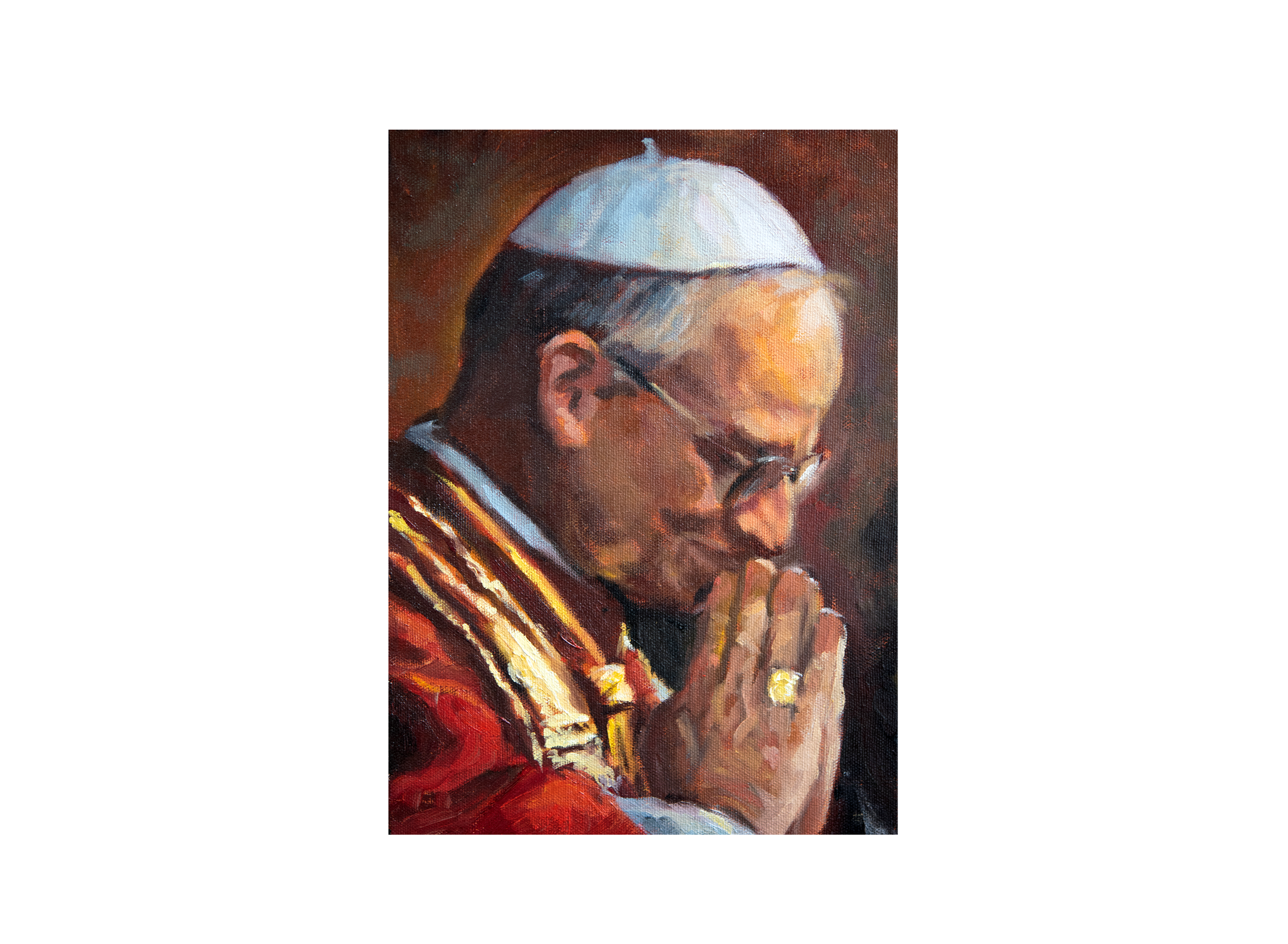
An archival giclée print created with museum-quality pigment inks on fine art paper, faithfully preserving the depth, color, and contemplative presence of the original painting.
“Look to Christ! Come closer to Him!”
— Pope Leo XIV
This painting captures a sacred and historic moment: the election of Pope Leo XIV on May 8, 2025. Just after his acceptance, before the world knew his name, he bowed his head in silent prayer—a gesture of humility, awe, and surrender. This is the precise instant portrayed here, rendered in luminous, earth-toned layers that reflect both the weight of the papal office and the intimacy of personal prayer.
As he would soon proclaim in his inaugural homily: “Look to Christ! Come closer to Him!” This image invites the viewer into that very turning point—a moment where the burdens of the world met the stillness of faith. It is not only a portrait of a new pope, but of a soul offering himself wholly to the service of the Church.
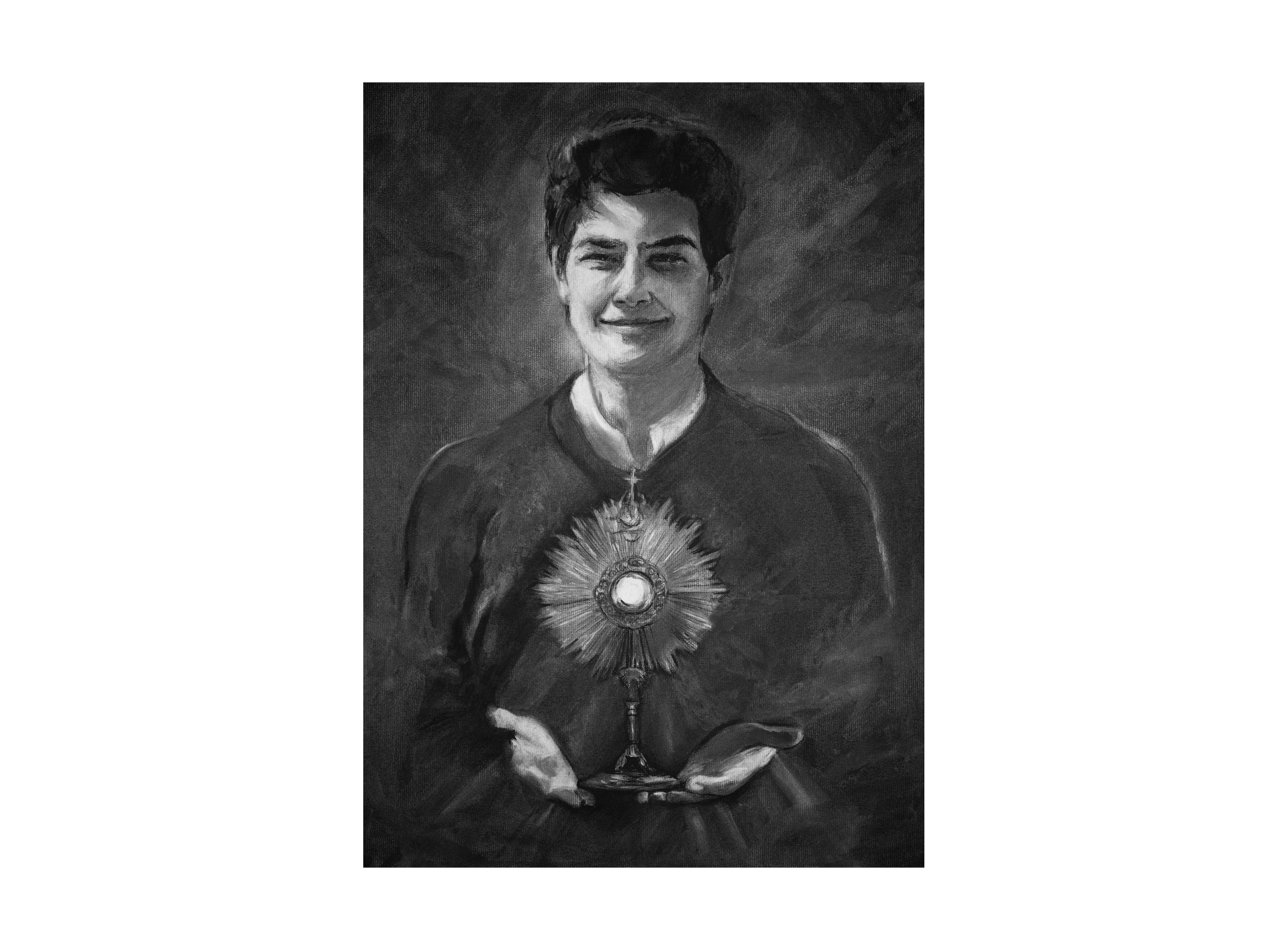
An archival giclée print created with museum-quality pigment inks on fine art paper, faithfully preserving the depth, color, and contemplative presence of the original painting.
“There is a beauty that delights the eyes, but there is also a beauty that enlightens the soul.”
— Saint Augustine, Sermons